Does the end of The Pitt Season 2 deliberately challenge the famous motorcycle ending of House MD?
Major spoilers for both series follow.
There is an interesting motorcycle-shaped connection between the endings of House MD and the second season of The Pitt.
Both concern brilliant, damaged doctors who have reached the point where continuing as before appears impossible. Both present a motorcycle as an escape route. Both understand the seductive idea of simply pointing the front wheel towards the horizon and leaving responsibility, institutional politics and fluorescent lighting behind.
But they reach very different conclusions about what that motorcycle means.
Everybody Rides
House was always heading towards a dark ending.
By its final season, Gregory House had destroyed most of his relationships, sabotaged his career and was facing another spell in prison. His best friend Wilson was dying of cancer. House’s intelligence could solve almost any medical puzzle, but it had never taught him how to live with himself.
Then the finale performed an astonishing handbrake turn.
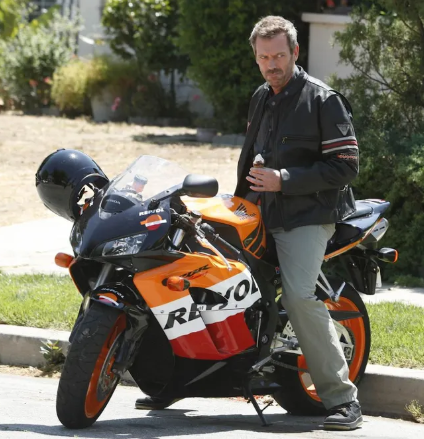
House faked his death, escaped prison and abandoned medicine. Wilson discovered that his supposedly dead friend was waiting for him, and the two rode away together on motorcycles to spend Wilson’s remaining months on the road.
For many viewers this was moving. House finally put another human being ahead of his job, his addiction and his compulsive need to be right.
I hated it.
It felt less like a conclusion than a television network spotting the approaching abyss and hurriedly erecting a sign saying SCENIC MOTORCYCLE ROUTE.
House had spent eight seasons demonstrating that pain cannot simply be outmanoeuvred. Then, suddenly, the answer appeared to be two motorcycles, an open road and the administrative convenience of a fraudulent death certificate.
It was Easy Rider with better diagnostic equipment.
Dr Robby’s Spirit Quest
At the end of The Pitt Season 2, Dr Michael “Robby” Robinavitch appears to be preparing his own version of the House escape.
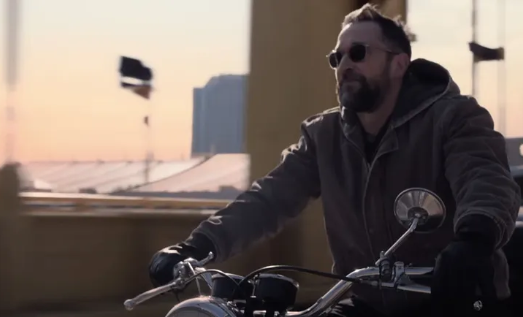
He intends to take a motorcycle trip after an exceptionally difficult period in which his exhaustion has become something much more dangerous. The journey is described as a kind of spirit quest, but his refusal to wear a helmet makes the intended symbolism difficult to miss.
This is not a man carefully planning a restorative touring holiday.
He is not comparing waterproof luggage systems or checking whether his breakdown cover includes Ohio. His friends understand that the trip may contain a self-destructive element, and Dr Abbott specifically tells him to stop the “helmetless motorcycle” behaviour.
The motorcycle in House is presented as freedom.
The motorcycle in The Pitt is an escape route which may also be an exit.
Then Robby encounters Baby Jane Doe.
Instead of ending the episode with Robby firing up the bike and disappearing down an empty highway, The Pitt leaves him holding an abandoned baby girl. He swaddles her, feeds her and tells her that, despite a bad beginning, she has people to meet and things to see.
He is supposedly talking to the baby.
He is obviously also talking to himself.
The show’s producers have since indicated that Robby still takes the journey. The baby does not literally cancel the motorcycle trip. But she changes the meaning of it. Robby is no longer simply fleeing the hospital towards possible oblivion. He has briefly rediscovered the part of himself that still wants another vulnerable human being to survive.
That is a small difference in plot and an enormous difference in outlook.
A Baby Is Not Necessarily the Low-Stress Option
There is, admittedly, a weakness in the symbolism.
The finale appears to contrast a dangerous vintage motorcycle with the nurturing innocence of a baby girl.
As somebody familiar with British motorcycles, I am not convinced the baby represents the less stressful long-term commitment.
A vintage Triumph Bonneville and a newborn baby have a surprising amount in common:
- Both wake you up at antisocial hours.
- Both produce mysterious fluids.
- Both require bottles.
- Both make noises which may indicate either complete normality or an imminent catastrophe.
- Neither arrives with instructions anyone can actually follow.
- Both attract advice from complete strangers.
- Both become more expensive shortly after you have told somebody they are “not actually costing that much.”
- Both can reduce a competent adult to standing helplessly in the kitchen or garage saying, “What do you want from me?”
The Bonneville has some advantages.
It can usually be left in the garage while you go to work. Social services do not become involved if you place it on an optimiser overnight. It will not eventually demand a pony.
The baby, on the other hand, is less likely to deposit its entire oil supply over the driveway. It may also become easier to start as it gets older, which cannot be guaranteed with the Triumph.
Robby has therefore not necessarily chosen tranquillity over danger.
He has chosen one demanding, unpredictable object requiring constant attention over another.
The important difference is that the baby needs him.
Work Is Not Always the Enemy
This is where The Pitt offers a more useful message than House.
Modern drama often treats employment as the obstacle standing between a character and their authentic life. The answer is to resign, abandon the city, buy a motorcycle or open a suspiciously profitable café beside the sea.
Sometimes leaving really is necessary. A destructive workplace can damage confidence, health and judgement. Robby clearly needs to get away from the emergency department for a while.
But The Pitt does not pretend that meaning exists only beyond work.
Robby’s job has injured him because he cares about it. The hospital contains trauma, bureaucracy, exhaustion and failure, but it also contains the most important things he has ever done. His skill matters there. His presence matters. Other people are alive because he came to work.
That is not corporate positivity. Nobody is being asked to display a motivational poster about teamwork above the resuscitation trolley.
It is something more solid: the recognition that useful work can provide identity, structure and connection even when the organisation surrounding it is imperfect.
When work is going badly—or when there is no work at all—the fantasy of the dramatic exit becomes enormously attractive. Burn the career down. Retrain overnight. Leave the country. Ride into the sunset. Become a lighthouse keeper despite having no maritime qualifications and a strong dislike of stairs.
Real recovery is usually less cinematic.
It might mean stepping away without disappearing. Resting without surrendering. Learning something new without declaring everything previously learned worthless. Remaining open to the possibility that the next worthwhile role may look different from the last one.
Most importantly, it means not confusing a bad period of employment with a final judgement on the value of the person doing the work.
No Sunset Required
The ending of House suggests that salvation lies outside the hospital, on the road, beyond the reach of consequences.
The ending of The Pitt offers something less romantic and more convincing.
Robby may still ride away. He probably should. But the journey is no longer presented as a magical cure, and the motorcycle is not allowed to become a glamorous instrument of self-destruction.
Before he leaves, he holds another abandoned creature and tells her that a terrible beginning does not determine the rest of the story.
That is the real ending.
Not the baby instead of the bike.
Not work instead of freedom.
A reminder that it remains possible to leave a painful situation without abandoning the future—and that sometimes the first sign of recovery is simply finding that you still care what happens next.